
-
 Terry Wyatt/Getty ImagesTaylor Swift, whose latest album is now the first to surpass one billion Spotify streams in a single week, has smashed another record as well.
 -
The project called "Songwriter" was initially shelved, but Cash's son recruited some of his father's oldest collaborators to finish the project. The album comes out June 28.


-
 Davis led the Toronto Symphony Orchestra, Britain's Glyndebourne Festival, the BBC Symphony Orchestra, the Melbourne Symphony Orchestra and the Lyric Opera in Chicago.
 -
It's bound to catch some attention when a new Lennon-McCartney collab drops in 2024 — only this time, it's not John and Paul but their youngest sons, Sean Ono Lennon and James McCartney.
-
Parts of the world experienced a total solar eclipse this month, but what good is it without a soundtrack? On the day of the eclipse, Soundgarden's song "Black Hole Sun" saw a boom in streams.
-
 The Norwegian soprano, with plenty of horsepower, unleashes a high C, and much subtle singing, in a thrilling set.
 -
"Primrose Hill" is a gently nostalgic ditty by James McCartney, with cowriting credit to Sean Ono Lennon. On Instagram, McCartney said the song was inspired by an idyllic boyhood memory.
-
According to Variety, Leonardo DiCaprio has agreed to take on the title role with Jennifer Lawrence set to play Ava Gardner, Ol' Blue Eyes' second wife.
-
 A new single, "Primrose Hill," was co-written by Sean Ono Lennon and James McCartney, the youngest sons of Beatles musicians John Lennon and Paul McCartney.
 -
The two songs added to the National Recording Registry at the Library of Congress are Juan Gabriel's 1990 hit called "Amor Eterno" and Hector Lavoe's classic from 1978 "El Cantante."
-
Right in the middle of Billy Joel's signature tune "Piano Man" the network cut away for local news in the Eastern and Central time zones. CBS will rebroadcast the whole show this Friday night.
-
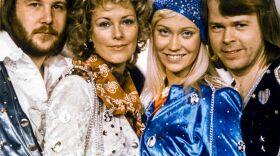 Every year, the Library of Congress names 25 "audio treasures" to be preserved permanently. This year's selections range from ABBA and Green Day to World War I-era jazz pioneer James Reese Europe.


